The United States has openly criticised the newly concluded India–European Union trade agreement, with US Treasury Secretary Scott Bessent accusing Europe of putting commercial gains ahead of its political and moral commitments to Ukraine.
Speaking days after the deal was announced, Bessent said the agreement was “deeply disappointing”, arguing that it weakens Western unity at a time when the US and its allies are trying to maintain pressure on Russia over the ongoing Ukraine war .
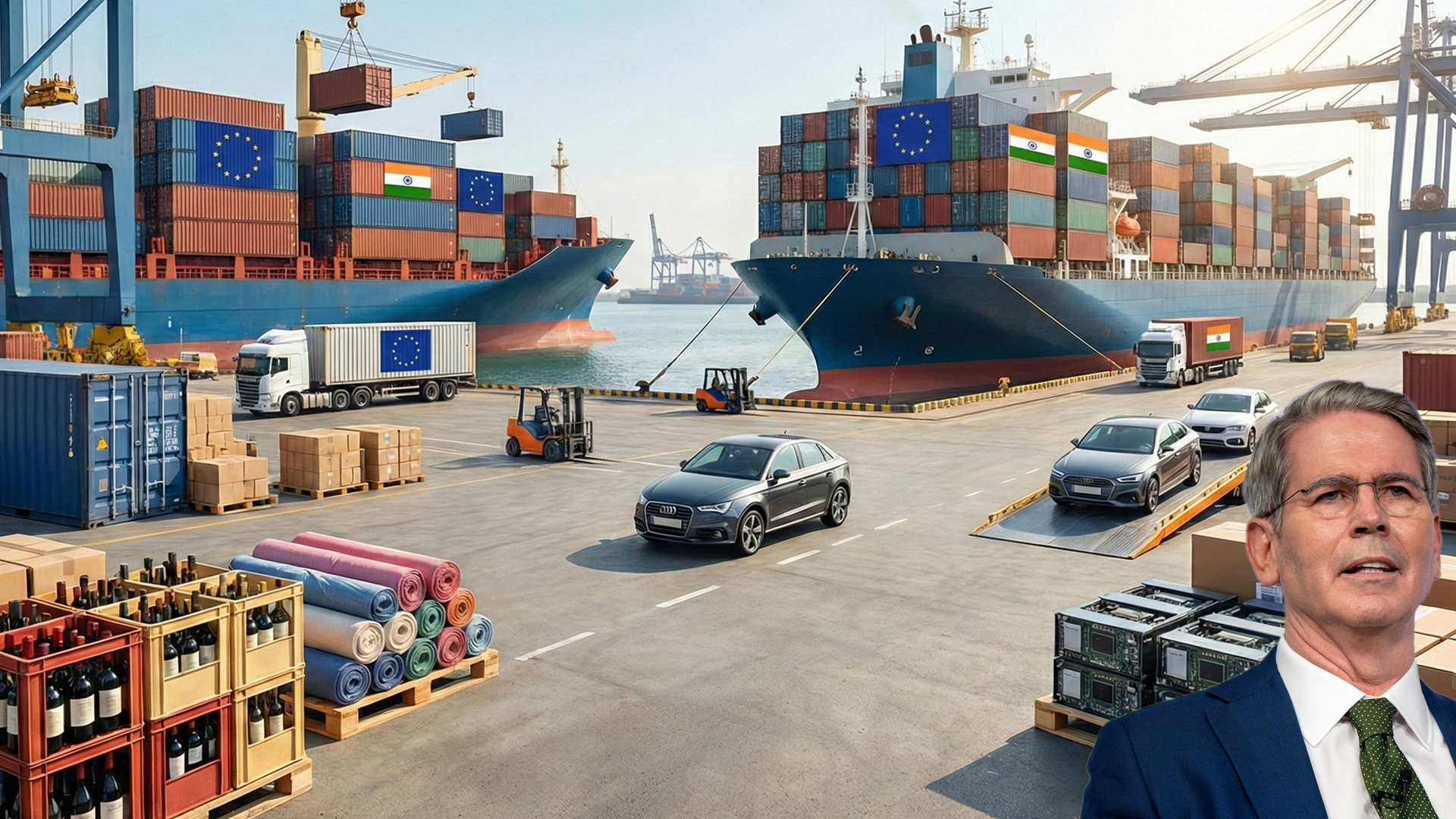
The India–EU Free Trade Agreement, negotiated over several years, is being described by European leaders as a landmark pact that could dramatically boost trade between the two sides. It aims to cut or eliminate tariffs on most goods and expand cooperation across sectors such as manufacturing, technology, services and clean energy. Supporters in Europe see it as a major economic win that could significantly increase exports to India in the coming decade.
However, Bessent argued that the timing and intent of the deal raise serious questions. He said European countries continue to buy refined fuel products from India that are made using Russian crude oil, which he claimed indirectly helps fund Moscow’s war effort. According to him, Europe is effectively “financing the war against itself” while publicly supporting Ukraine .
The US treasury chief contrasted Europe’s approach with Washington’s tougher stance. He noted that the United States has imposed 25% tariffs on certain Indian imports linked to Russian oil, while European governments have chosen not to back similar measures because they were keen to finalise the trade deal with New Delhi .
Bessent’s comments underline growing differences between the US and Europe over how to balance economic interests with geopolitical responsibilities. While Washington has pushed for stricter economic penalties to isolate Russia, European countries have faced internal pressures over energy security, inflation and growth, making a clean break from Russian-linked trade more complex.
Also Read: Smithsonian museum to return 3 stolen Indian temple bronzes