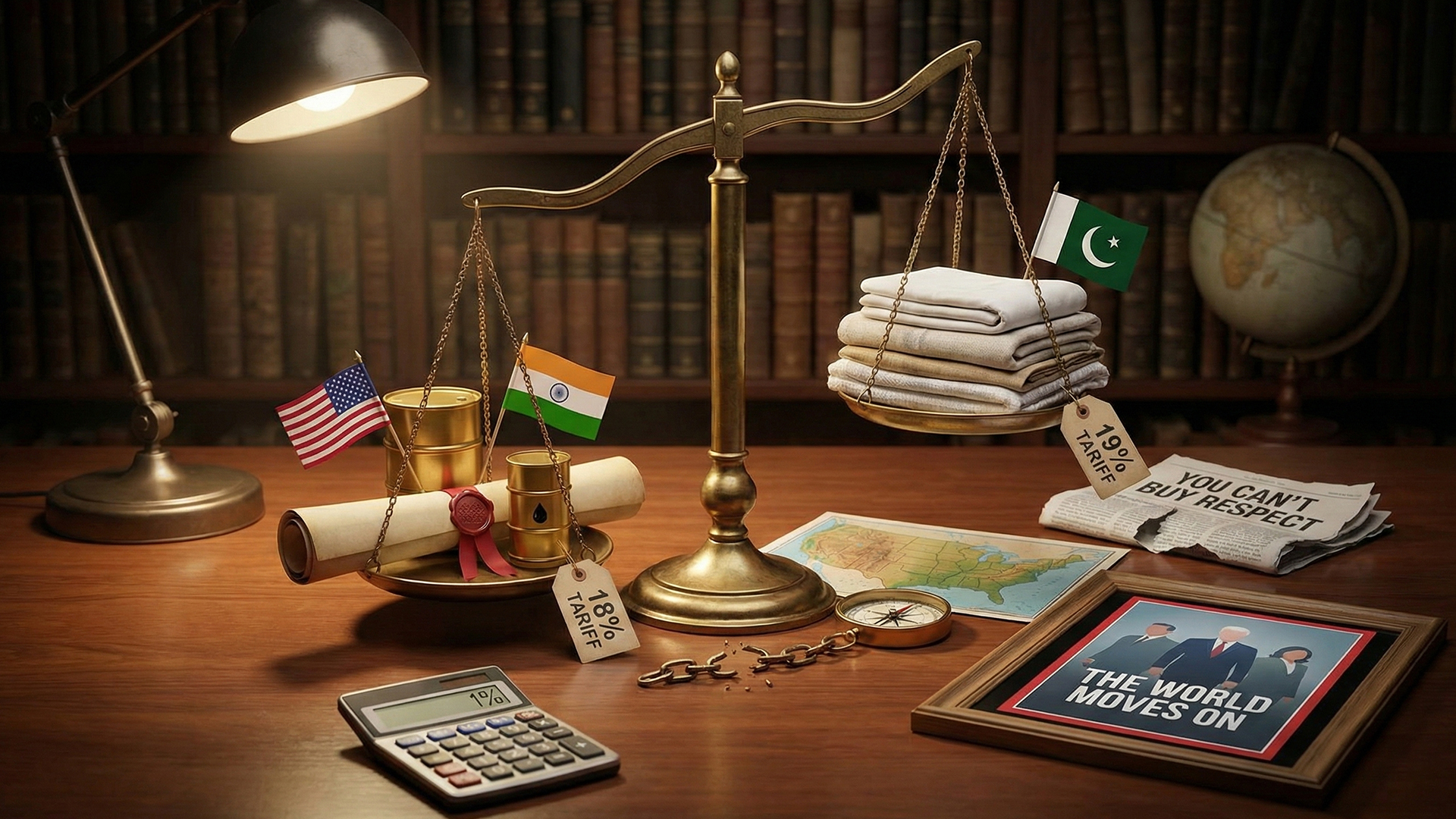
Pakistan is under intense domestic scrutiny after the United States and India announced a trade deal that benefits Indian exporters more than Pakistani ones. The agreement, unveiled on February 2, 2026, lowers US import tariffs on Indian goods to 18%, while Pakistan’s exports continue to face slightly higher tariffs of 19%.
The outcome has sparked criticism from politicians, analysts, and social media users in Pakistan, with many questioning the country’s diplomatic strategy. Former Pakistan Tehreek‑e‑Insaf (PTI) minister Hammad Azhar said the deal exposes the shortcomings of relying on personal diplomacy, arguing that foreign policy should prioritise economic leverage and market access over symbolic gestures.
Public reaction has been vocal on social media, where many highlighted Pakistan’s previous efforts to gain favor with US leaders, including high-profile recognitions, as largely ineffective. The phrase “you cannot buy respect” has become a popular refrain, summarizing widespread frustration with Islamabad’s approach.
Journalists and commentators also pointed to the potential economic consequences. Higher tariffs could make Pakistani exports less competitive in the US market, adding pressure to an already challenging economic environment marked by declining exports and low foreign investment. Some analysts drew a contrast with India, noting that New Delhi’s focus on strategic autonomy and economic negotiation allowed it to secure more favorable trade terms.
The backlash underscores growing domestic concern over Pakistan’s foreign policy and trade strategy at a time when India is strengthening its economic ties with the US and other global partners.
Also Read: US‑Iran nuclear talks set in Oman