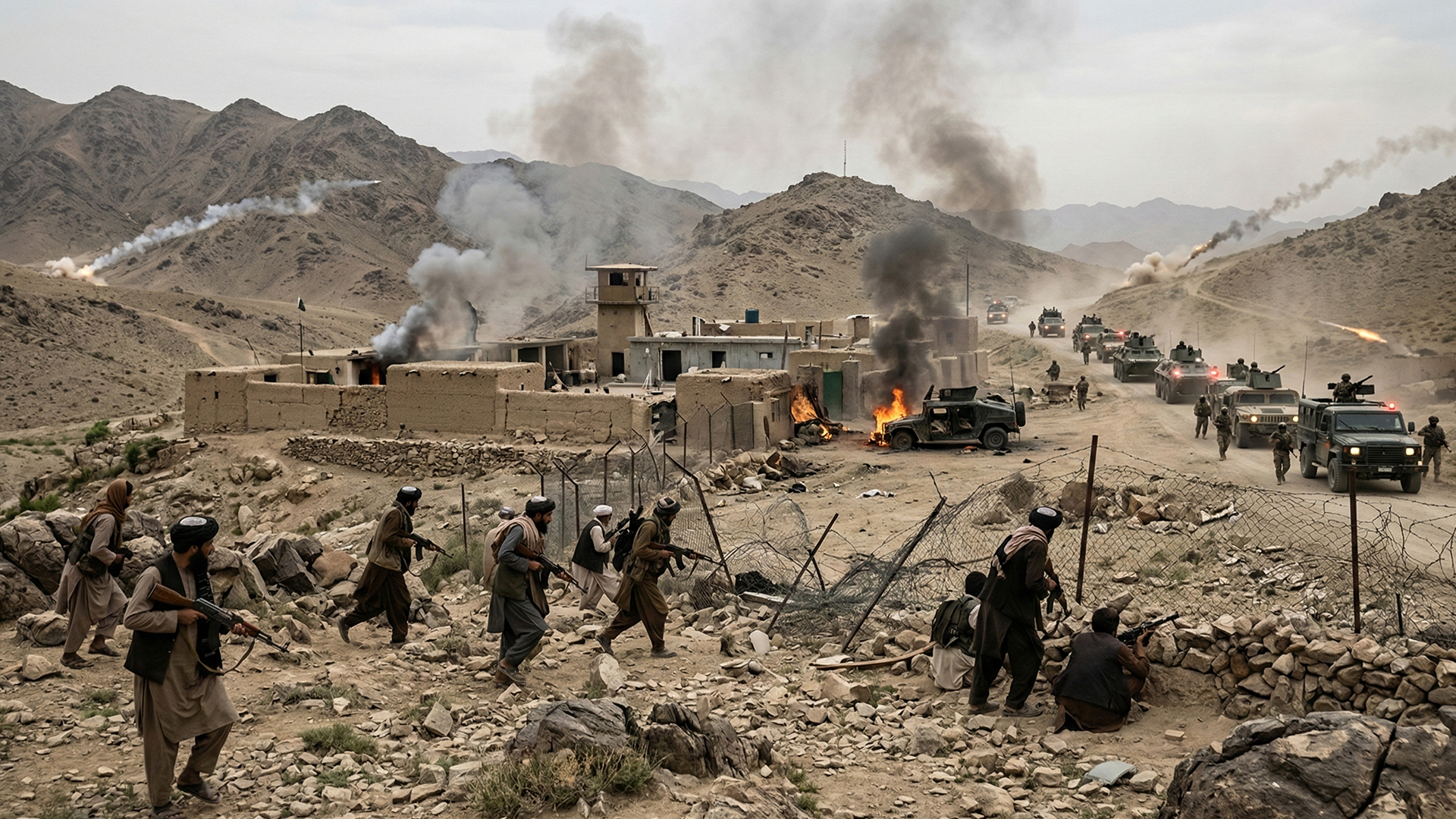
Fear and uncertainty have gripped communities along the Pakistan-Afghanistan border after fresh fighting erupted between the two neighbours, leaving soldiers and civilians caught in the middle. What began as border tensions has now escalated into airstrikes, heavy shelling and sharp warnings from both sides.
According to reports, Pakistan carried out air and missile strikes inside Afghanistan, including areas near Kabul and eastern provinces, saying it was targeting militant hideouts. Islamabad has long accused the Taliban-led Afghan government of allowing fighters from the Tehrik-i-Taliban Pakistan (TTP) to operate from Afghan soil and launch attacks across the border. Kabul has repeatedly denied these claims.
Afghan officials said the strikes hit military positions and nearby areas, causing casualties among security personnel and civilians. Images shared locally showed damaged buildings and frightened residents fleeing to safer locations. In response, Taliban forces reportedly fired artillery at Pakistani border posts, claiming they inflicted losses on Pakistani troops.
Both sides have issued strong statements, each blaming the other for starting the confrontation. Casualty figures shared by Islamabad and Kabul differ sharply, and independent verification remains difficult. Border crossings such as Torkham have faced disruptions, affecting trade and daily travel for thousands who rely on cross-border movement.
For families living along the disputed Durand Line, the violence is a painful reminder of years of instability. Many residents described nights filled with explosions and uncertainty, unsure whether the clashes would spread further.
The escalation comes at a sensitive time for the region, already dealing with economic strain and political challenges. Analysts say the situation risks spiralling if diplomatic channels are not activated quickly.
Also Read: US sends F-22 Raptors to Israel in rare military move