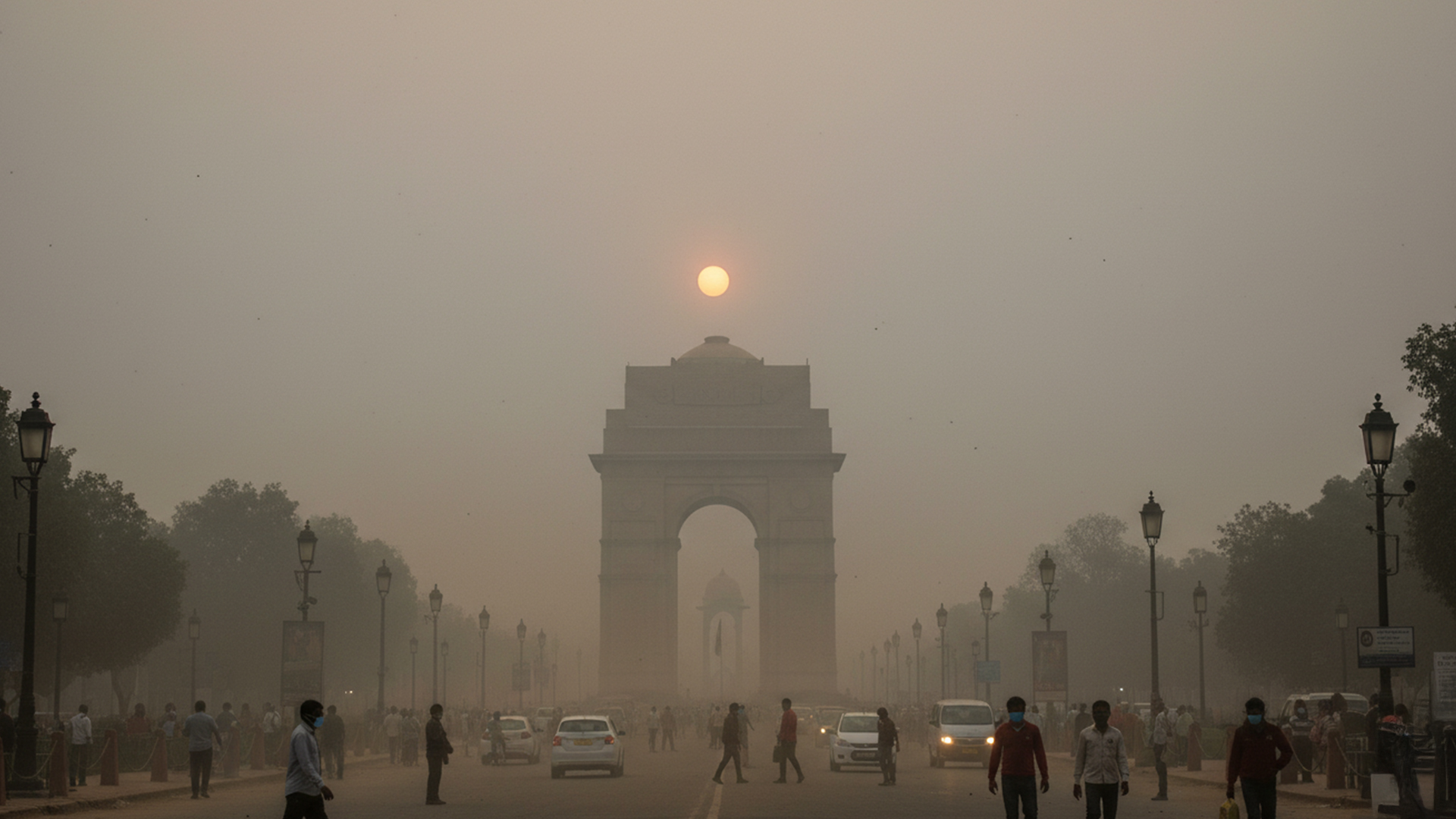
Delhi woke up on Saturday to a thick blanket of smog that reduced visibility and left the air tasting of dust and smoke. The city’s Air Quality Index (AQI) climbed to around 386, which falls in the “very poor” category and is harmful for almost everyone, especially children, the elderly, and people with breathing problems.
The smog built up overnight as cold air and almost no wind trapped pollutants close to the ground. Experts say this happens often in November, when weather conditions prevent dirty air from moving away. Smoke from crop-burning in nearby states, vehicle emissions, dust from construction, and everyday urban pollution all combine to make the air toxic during this season.
Several places in Delhi recorded even worse numbers, touching the “severe” range. In these areas, people complained of burning eyes, headaches, and breathing discomfort. Doctors warn that even healthy people may feel the impact if they stay outdoors for long.
Authorities have been spraying water in some parts of the city to settle dust, but so far, stricter emergency measures have not been introduced. Officials are monitoring the situation closely, but forecasts suggest that the poor air could continue for the next few days because the weather is not expected to improve immediately.
As the city continues to struggle, residents are being advised to avoid heavy outdoor exercise, wear well-fitting masks, keep windows closed during peak pollution hours, and use air purifiers if available. Schools and vulnerable communities are especially on alert as the smog shows no signs of lifting soon.
Also Read: Srinagar police station accidental blast claims 9 lives