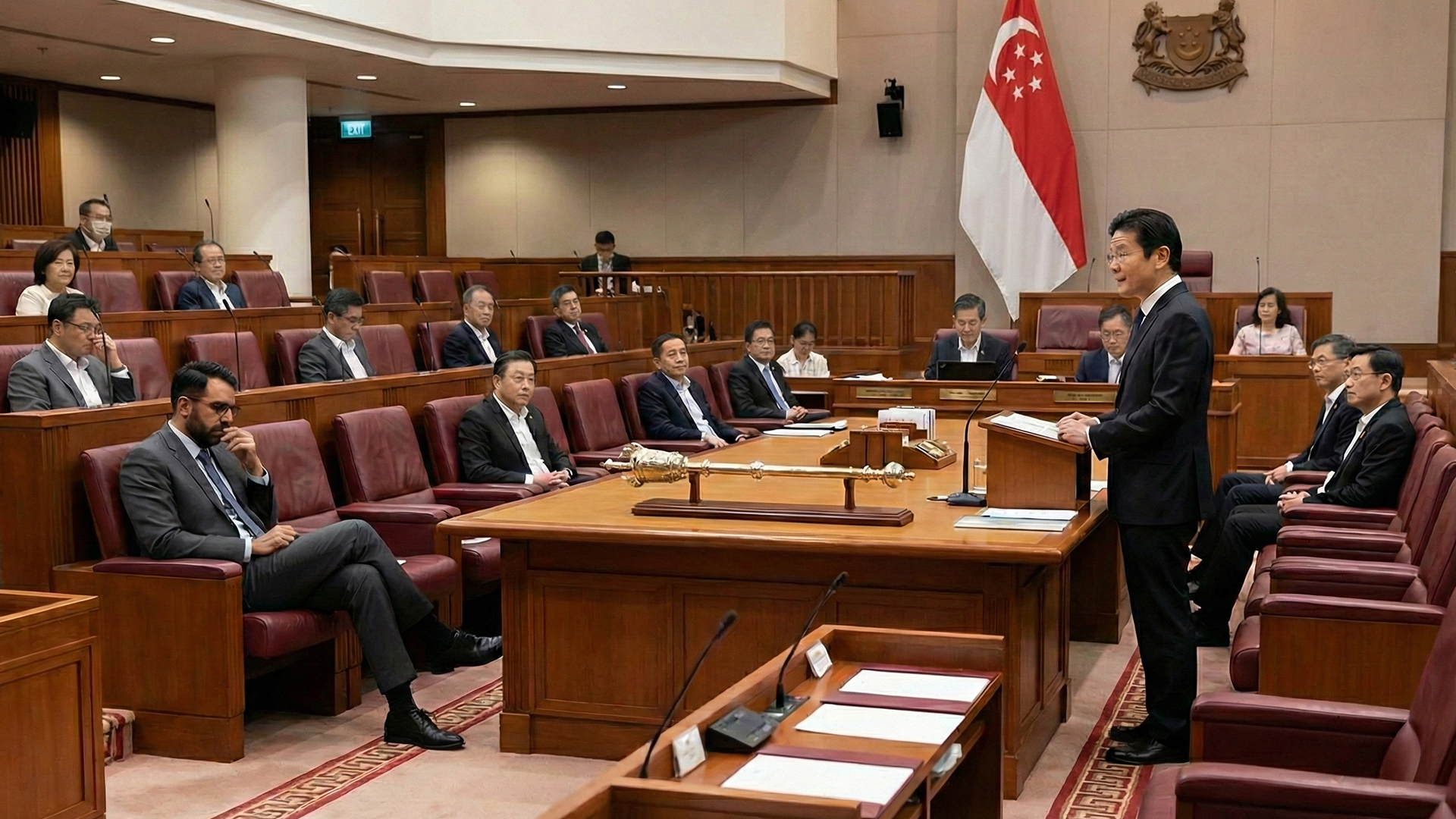
Singapore Prime Minister Lawrence Wong has removed Pritam Singh, the Indian-origin head of the Workers’ Party, from his position as Leader of the Opposition (LO), effective immediately. The move comes after Singh’s criminal convictions and concerns about his suitability to hold the parliamentary role.
Wong said the decision was made “after careful consideration” to uphold the “rule of law, dignity, and integrity of Parliament.” Singh’s removal follows a parliamentary motion passed on January 14, which expressed “regret” over his conduct and concluded he did not meet the standards expected of an LO. While all Workers’ Party MPs opposed the motion, it was supported by the majority of parliamentarians.
The issue traces back to Singh’s 2025 conviction for providing false testimony to a parliamentary committee regarding former Workers’ Party MP Raeesah Khan. Singh was fined, and his appeal was dismissed by the High Court in late 2025.
Singh had been Singapore’s first formal Leader of the Opposition since the position was established in 2020. He will continue as a Member of Parliament and as secretary-general of the Workers’ Party, despite losing the LO role.
Prime Minister Wong has invited the Workers’ Party to nominate another MP to assume the opposition leadership, emphasizing that the candidate should not have been implicated in prior parliamentary committee findings and must meet high standards. The party said it will carefully consider its choice before responding.
The LO position, though not constitutionally enshrined, provides privileges including longer speaking time in parliament, higher allowances, and access to confidential government briefings. Singh’s removal is seen as a significant development in Singapore’s parliamentary politics, highlighting the emphasis on accountability and integrity in leadership roles.
Also Read: Govt. warns of Windows memory vulnerability