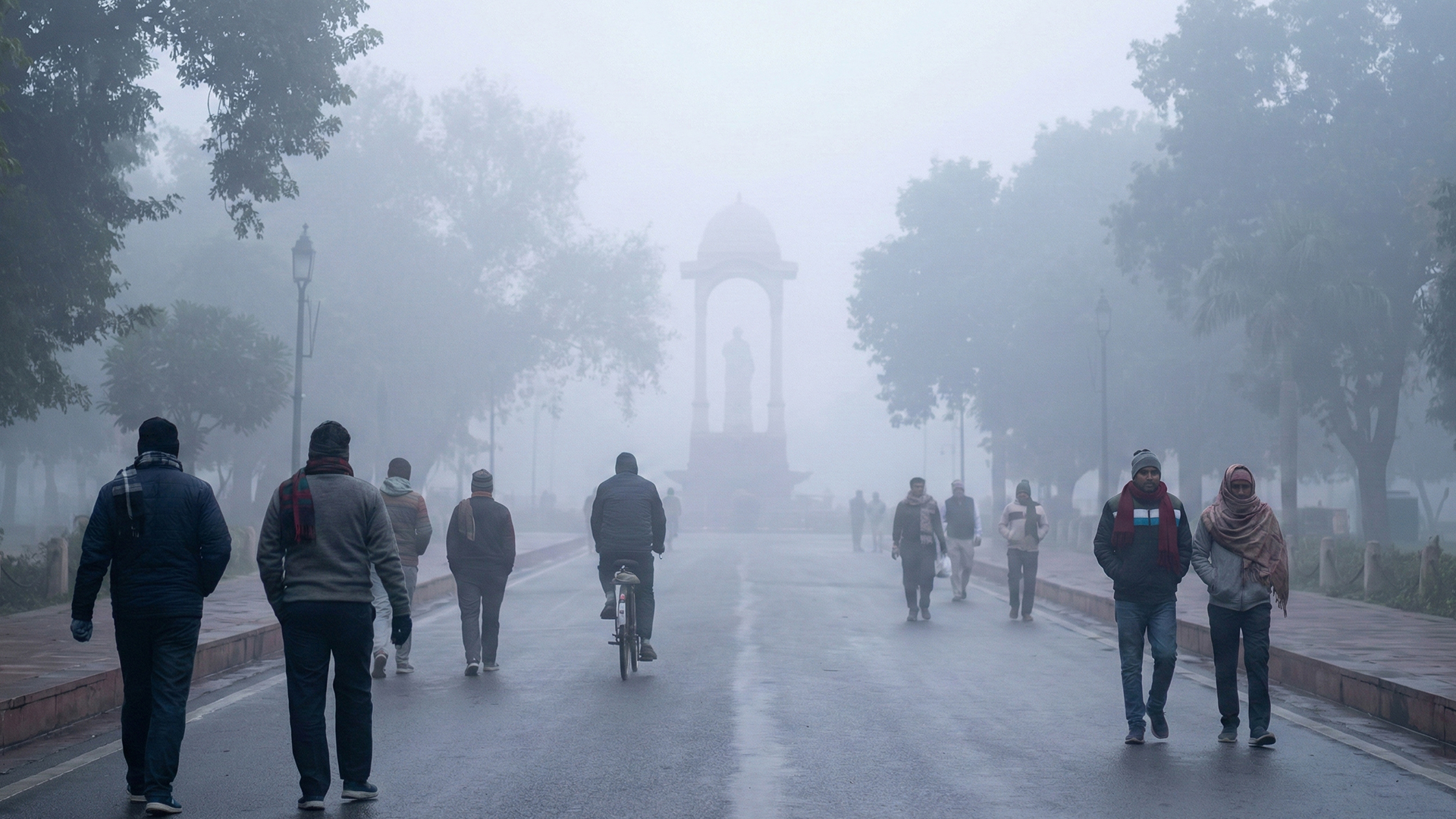
Delhi experienced its coldest morning of the season on Thursday as temperatures plunged sharply across the city, intensifying winter conditions. The Safdarjung Observatory, which provides Delhi’s official weather readings, recorded a minimum temperature of 2.9 degrees Celsius, the lowest this winter and among the coldest January mornings in recent years.
Several other weather stations in the national capital reported even lower readings, highlighting the severity of the cold wave. Palam recorded 2.3°C, its lowest minimum temperature in more than a decade. Ayanagar registered 2.7°C, while Lodhi Road recorded 3.4°C and the Ridge area saw 4.5°C. Most of these readings were significantly below the normal temperature for this time of the year.
According to weather officials, the sharp fall in temperature was caused by clear night skies and cold northerly winds blowing from the Himalayan region. These conditions allowed heat to escape rapidly after sunset, leading to freezing early-morning temperatures. The India Meteorological Department (IMD) said cold wave conditions are likely to persist, especially during night and early morning hours.
Despite the biting cold at dawn, daytime temperatures were relatively milder, with the maximum expected to hover around 21 degrees Celsius. However, experts warned that nights would continue to remain unusually cold over the next few days, and residents should prepare for continued chilly conditions.
The extreme cold was accompanied by very poor air quality, worsening discomfort for Delhiites. The city’s Air Quality Index (AQI) stood at 349, placing it in the “very poor” category. Such pollution levels can cause breathing difficulties, eye irritation, and other health issues, particularly for children, senior citizens, and people with respiratory illnesses.
Dense fog was also reported in parts of the city during the early morning hours, reducing visibility and slowing traffic movement. Authorities advised people to limit outdoor exposure during early hours, wear adequate warm clothing, and take precautions against both cold weather and pollution.
The current cold spell in Delhi is part of a broader pattern affecting large parts of north India, where winter conditions have intensified, disrupting daily life and prompting weather advisories across several states.
Also Read: Iran execution plan triggers global concern