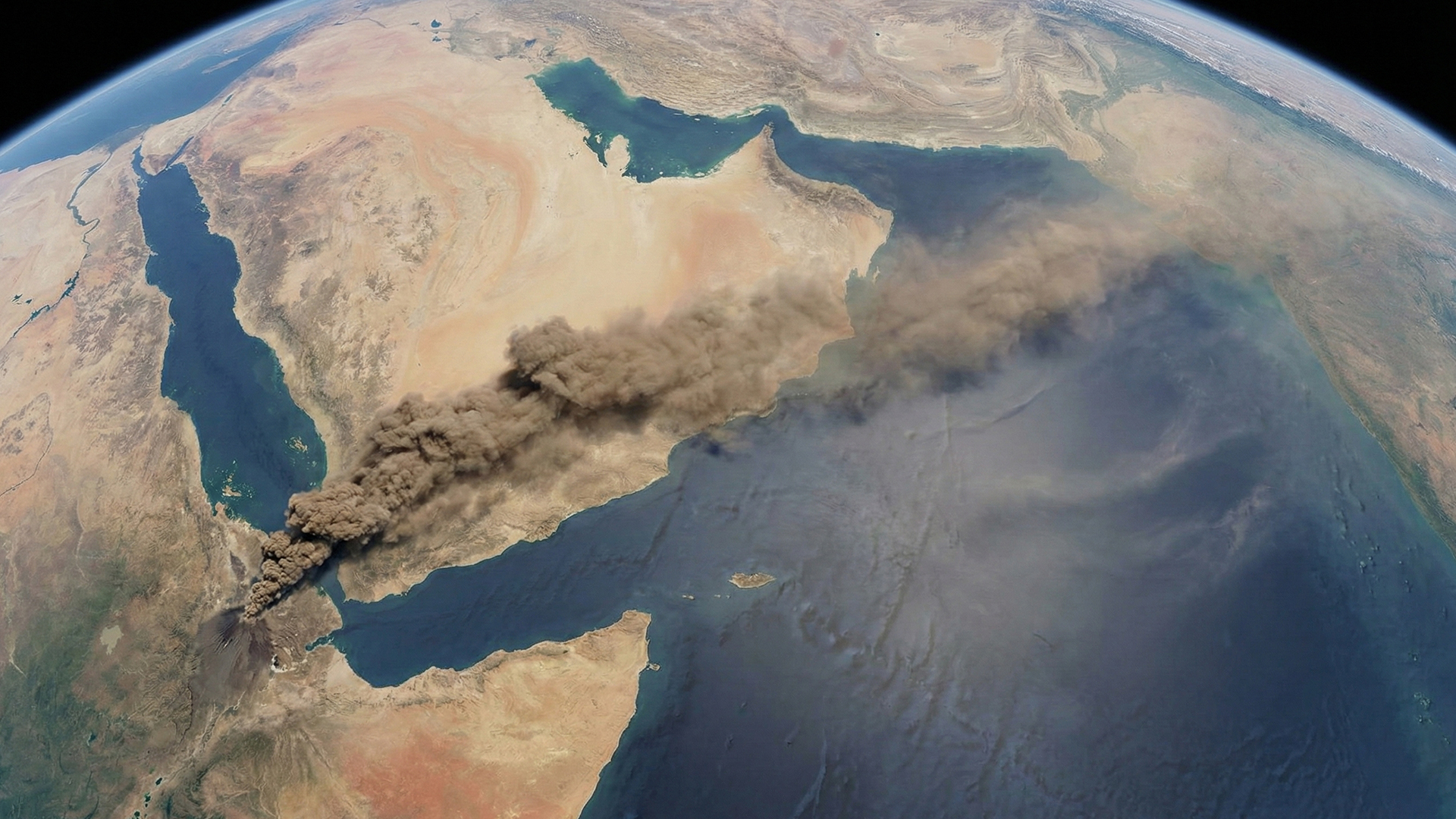
The Hayli Gubbi volcano in Ethiopia, which erupted on 23 November after nearly 12,000 years, has subsided, officials said. While the main eruption has ended, a residual ash and sulphur dioxide (SO₂) plume continued drifting at high altitudes but has now moved out of Indian airspace, easing flight disruptions.
Satellites tracked the volcanic cloud traveling across the Arabian Peninsula, over the Arabian Sea, and reaching western India within two days. States such as Gujarat, Rajasthan, Maharashtra, Punjab, Haryana, and Delhi-NCR experienced the plume overhead. Fortunately, the ash remained high, and ground-level air quality in Indian cities was largely unaffected.
Airlines including Air India and Akasa Air cancelled or delayed several flights to avoid ash-laden airspace. Aviation authorities issued safety alerts for flights connecting to the Middle East, Europe, and Asia. With the plume clearing, flight operations are gradually returning to normal.
Near the volcano, villages in the Afar region faced heavy ashfall, respiratory problems, and contamination of water and grazing lands. Livestock and crops were affected. Relief teams have been deployed to help residents, and no major casualties have been reported.
Experts note the eruption highlights how volcanic activity in one region can affect distant parts of the world, both in terms of air travel and potential climate effects. The release of sulphur dioxide into the upper atmosphere can form sulfate aerosols, which may temporarily influence regional climate patterns. Satellite monitoring played a crucial role in tracking the plume and issuing timely warnings.
Also Read: Chennai on high alert as cyclone Senyar nears coast