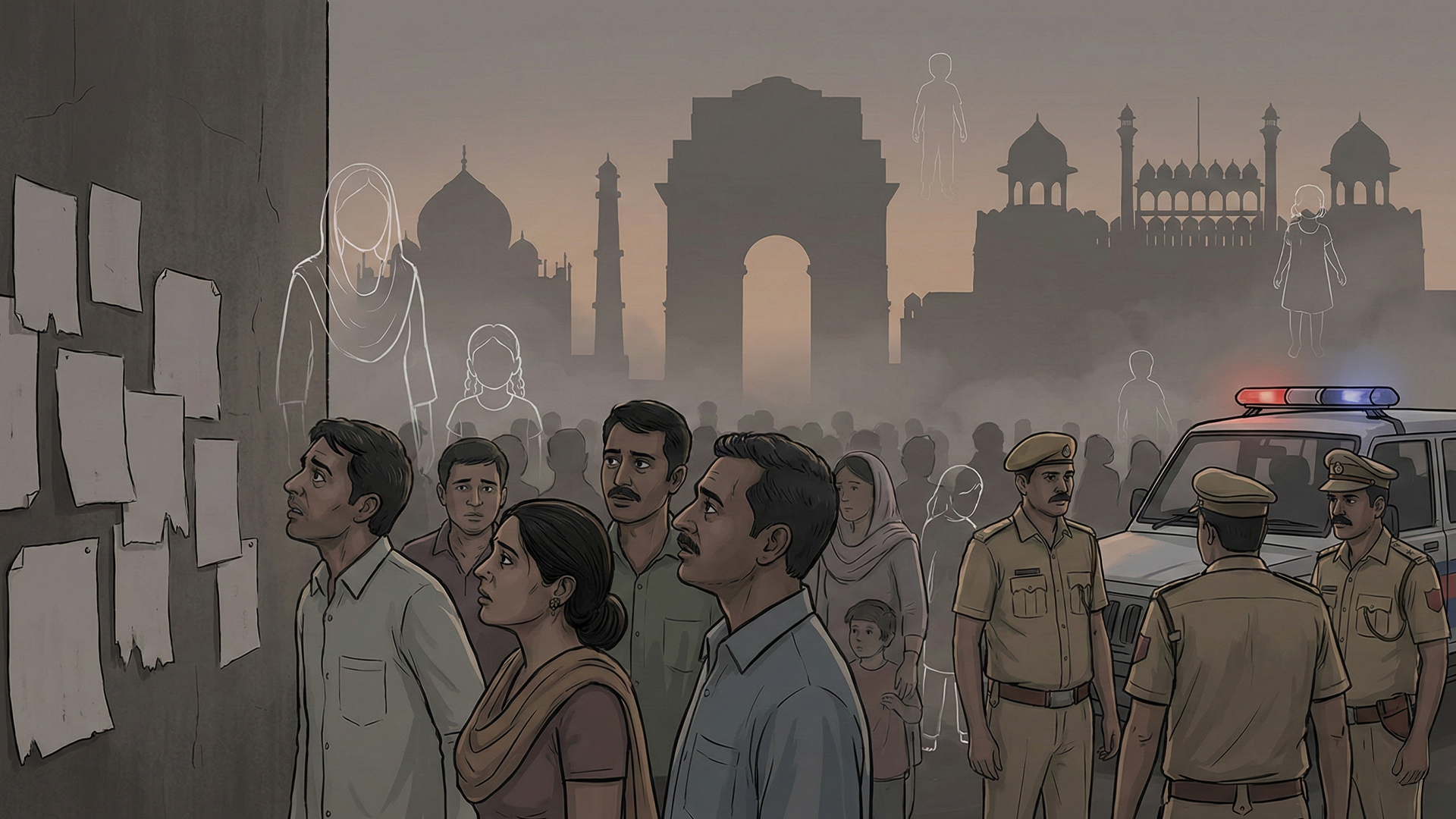
More than 800 people were reported missing in Delhi during the first few weeks of 2026, according to official police data, raising serious concerns about safety in the national capital. The figures show that an average of around 50–55 people went missing every day, with women and children forming a large share of the cases.
Police records reveal that over 800 missing-person complaints were registered between January 1 and mid-January, while data from the first 27 days of the year also shows similarly high numbers. Of these cases, several hundred people are yet to be traced, highlighting the scale of the challenge faced by law-enforcement agencies.
Women and girls make up the majority of those reported missing. More than 500 of the missing persons were women or female minors, accounting for nearly two-thirds of the total cases. Among them, a significant number are still untraced, causing deep concern among families and child-rights activists.
Children are among the most vulnerable groups in the data. Nearly 200 minors were reported missing during the period, with girls accounting for a much higher number than boys. Teenagers aged 12 to 18 years form the largest group among missing children, and a large percentage of them remain untraced even weeks after complaints were filed.
Adults continue to form the biggest category overall, with more than 600 adults reported missing, including both men and women. While police have managed to trace some individuals, hundreds of cases remain unresolved, adding pressure on investigation units across districts.
Delhi Police officials say that many missing-person cases involve people leaving home due to family disputes, work-related migration, or personal reasons. However, the high concentration of women and minors has raised fears related to safety, exploitation, and trafficking.
Authorities have urged families to report disappearances without delay, stressing that early reporting significantly improves the chances of tracing missing persons. Police are using multiple tools, including surveillance, local intelligence, and the ZIPNET missing-persons database, to track cases.
Also Read: Ajit Doval drew red line in US trade talks