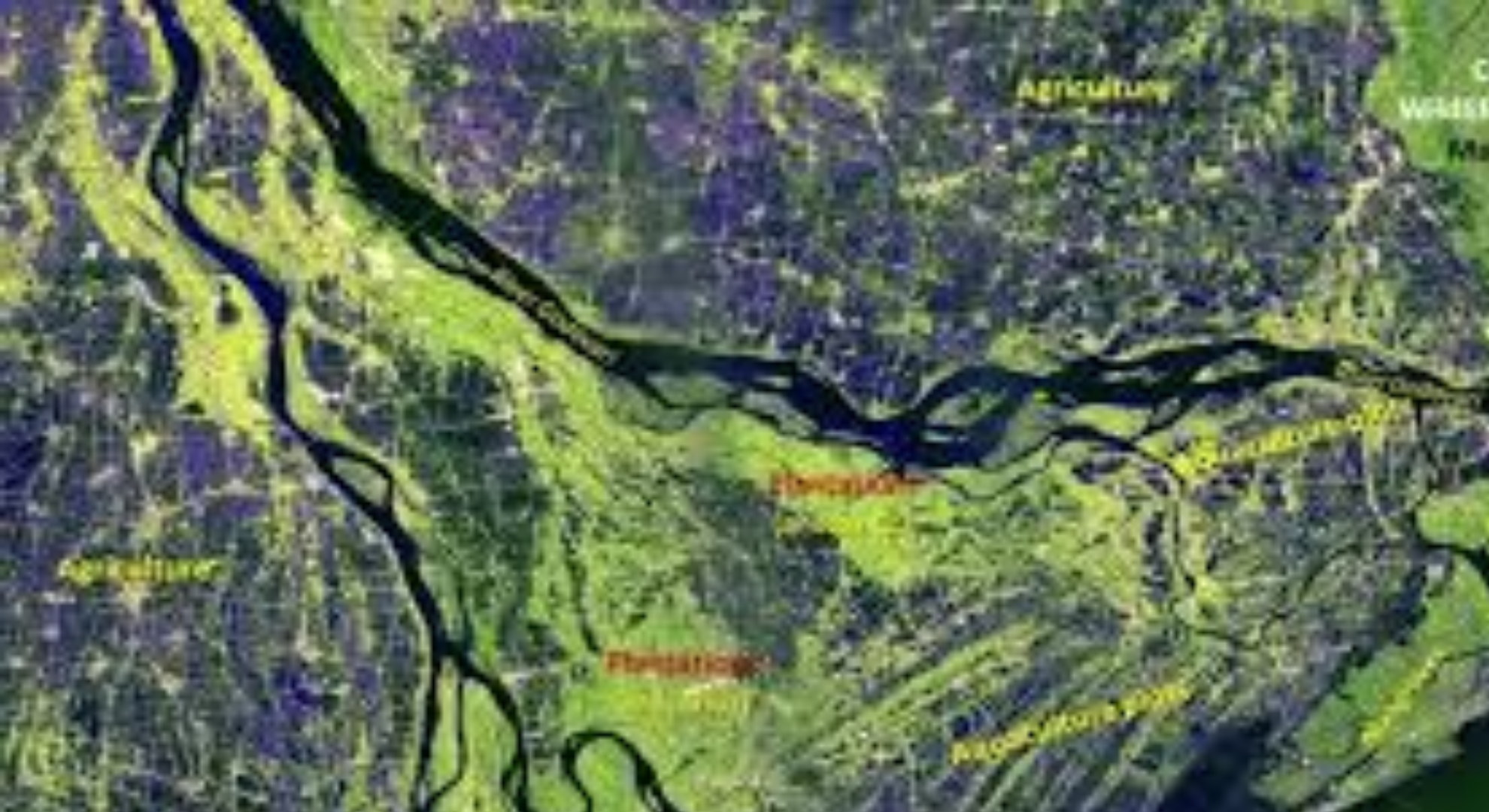
The Godavari Delta has always been a place of quiet magic that denotes the sacred union of river, soil and sea where mangroves breathe, farmers coax life from the land, and countless waterways weave their own stories. Now, for the first time, we are seeing this vast landscape the way nature sketches it from above.
The NISAR satellite which is a collaboration between ISRO and NASA , has entered its full science operations phase, and its very first S-Band radar image has stunned scientists. Captured on 19 August, the picture reveals every curve of the river channels, the bold textures of farmland, the intricate geometry of aquaculture ponds, and the dense threads of mangrove forests.
It’s almost as if the Earth has opened a secret diary page, and NISAR is helping us read it.
The satellite, launched in July 2025, carries two powerful radars, India’s S-Band and the US-built L-Band, mounted on a 12-metre antenna. For months, engineers have been tuning, testing and calibrating the instrument as it quietly circled the planet. Now, with everything working in sync, NISAR has officially begun its global observations.
But the Godavari Delta image is more than a technological milestone. It’s a reminder of how environmental change silently shapes our lives. With its ability to monitor crops, forests, glaciers, soil moisture, river patterns and even surface deformation, NISAR will help scientists track changes before they become disasters. From improving flood prediction to supporting farmers with better land-use data, the mission promises real, everyday impact.
As the first public S-Band image makes its way across scientific circles and social media, one thing feels certain: we are looking at the beginning of a new way of understanding our planet, not as a map, but as a living, breathing story.
Also Read: India, Indonesia near breakthrough on BrahMos sale